Raise your hand if you’ve had a boss declare how much they value your talent, but you were skeptical. You may have thought, “Sure. It’s easy to say you value my contributions, but then why did you [enter contradicting behavior].” As a leader, it’s critical to recognize the contradictions in what we say and do.
You shouldn’t have to say that you value your team. They should know based on your actions.
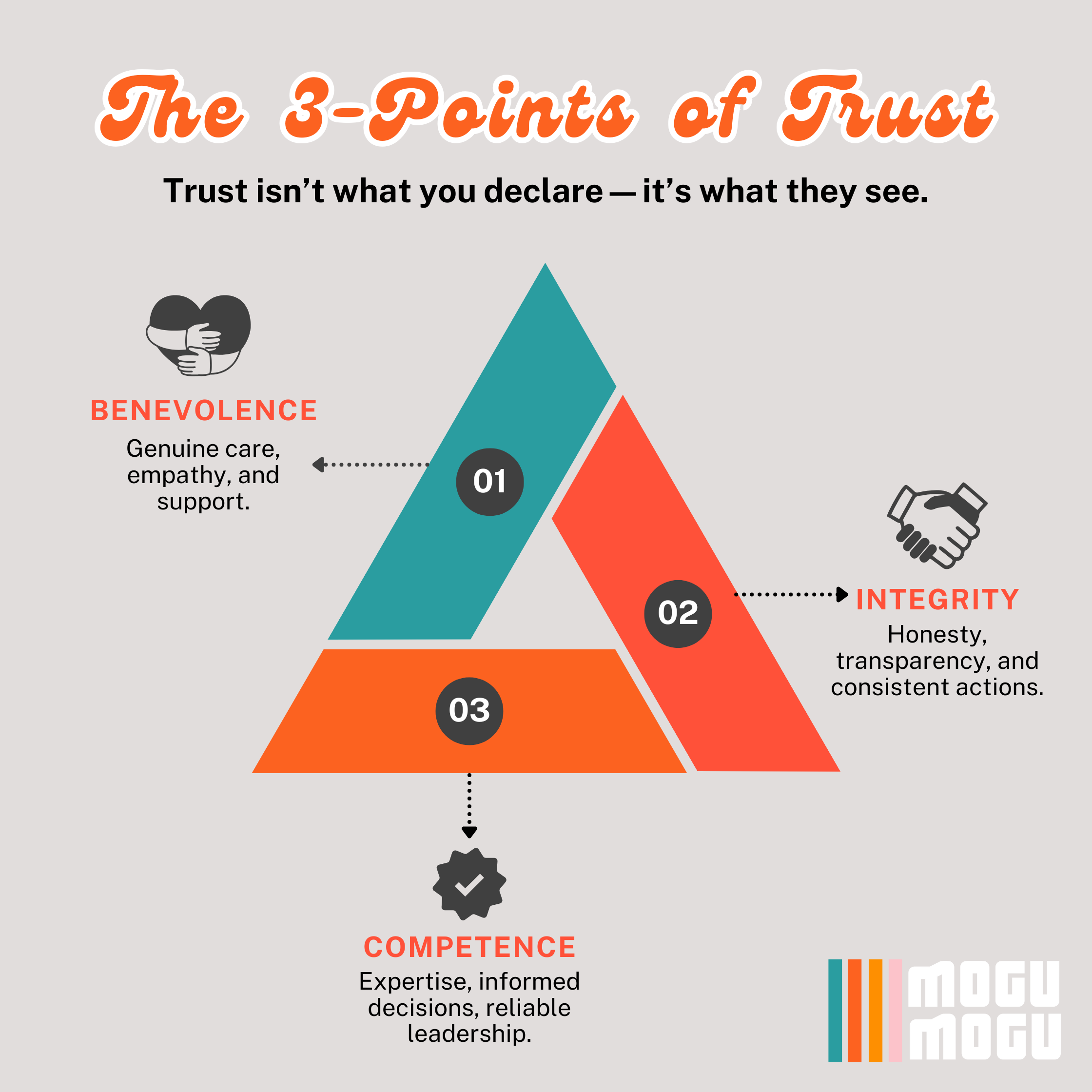
Trust isn’t a checkbox to tick off; it’s the foundation for solid teams. A leader may trust their team, but does their team trust the leader? Trust isn’t something a leader can claim to have, but, instead, it’s about what your team genuinely believes you posses, specifically benevolence, integrity, and competence.
The 3-Points of Trust
Trust is an intangible yet formidable force, grounded in authentic actions and behaviors of a leader. It’s a belief held by your team about your benevolence, integrity and competence.
Benevolence
Displaying sincere concern and empathy for your team members is the cornerstone of trust. It involves actively listening, offering support, and demonstrating that you have their best interests at heart.
Integrity
Trust thrives on unwavering integrity. It’s about being candid, transparent, and consistent in your actions.
Competence
Competence is the tangible proof of your leadership. It’s about showcasing your expertise, making informed decisions, and steering the ship with a steady hand.
Leaders who prioritize trust-building actions set a standard for the entire organization. Their actions create a culture where trust is valued and reciprocated. They serve as a catalyst for a workplace environment that thrives on mutual respect and confidence.
Leadership isn’t just a title; it’s a promise to nurture your team’s growth and well-being.
Leadership isn’t just a title; it’s a promise to nurture your team’s growth and well-being. Trust is the conduit through which this promise flows. By emphasizing trust-building behaviors in leadership training, we empower leaders to lead with integrity, empathy, and skill. This fosters a workplace where trust isn’t assumed but earned, every single day.